Sweat collection for sodium analysis
A step-by-step guide to collecting a clean, uncontaminated sweat sample for sodium concentration analysis. Sample integrity is the priority -- follow each step carefully for reliable results. The same session data (pre/post weight, fluid intake, duration) can also be used in the Sweat Rate Calculator to calculate your sweat rate.
Your kit includes
Before you begin — read carefully
- The primary goal of this session is to collect a clean, uncontaminated sweat sample for sodium analysis. The steps below are designed to protect sample integrity -- follow them exactly.
- If you also plan to use this session's pre/post weight and fluid data in the Sweat Rate Calculator, note that sweat rate is highly dependent on environment, intensity, and nutrition. For an accurate sweat rate, also replicate your race-day modality, intensity, conditions, and nutrition as closely as possible.
- Use the same exercise modality as race day: bike or run for single-sport athletes; your choice for multisport.
- Record the precise amount of fluid consumed during the full duration of your workout.
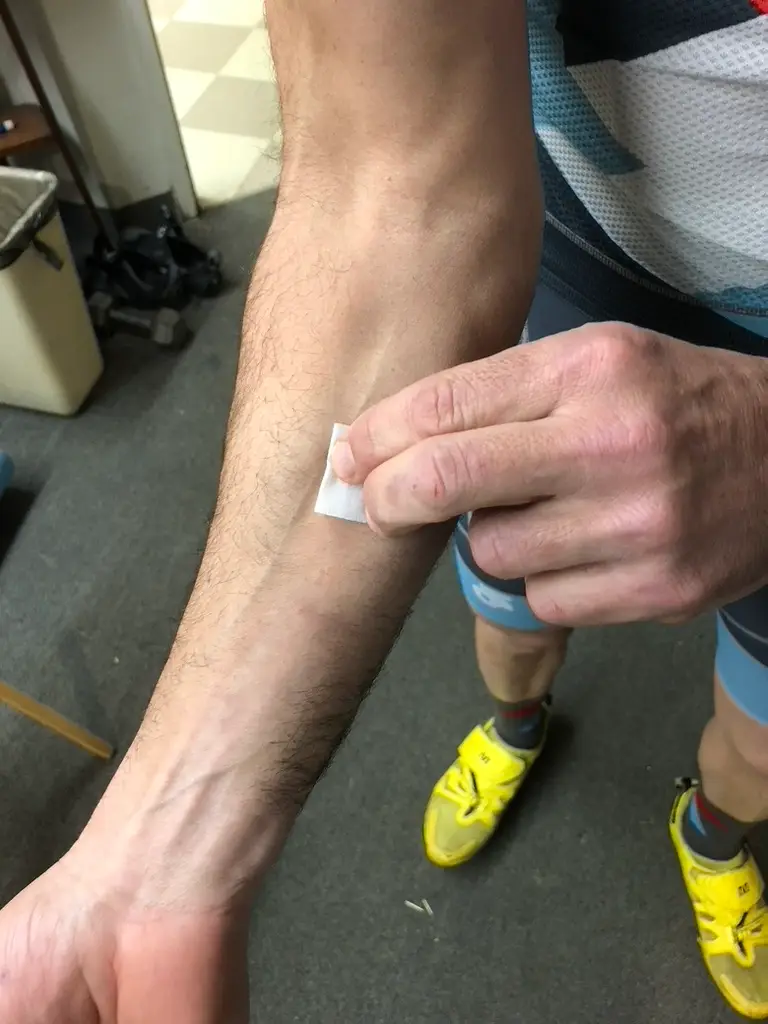
Start at the center and wipe outward — do not re-touch the cleaned area
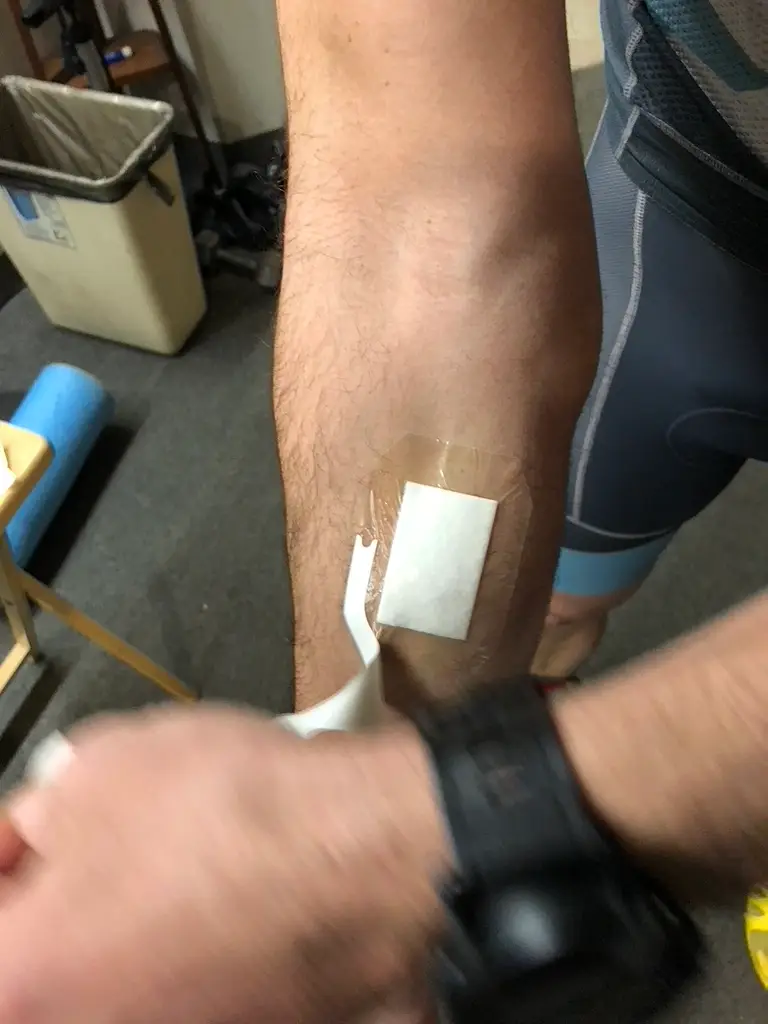
Positioning the dressing on the inner forearm
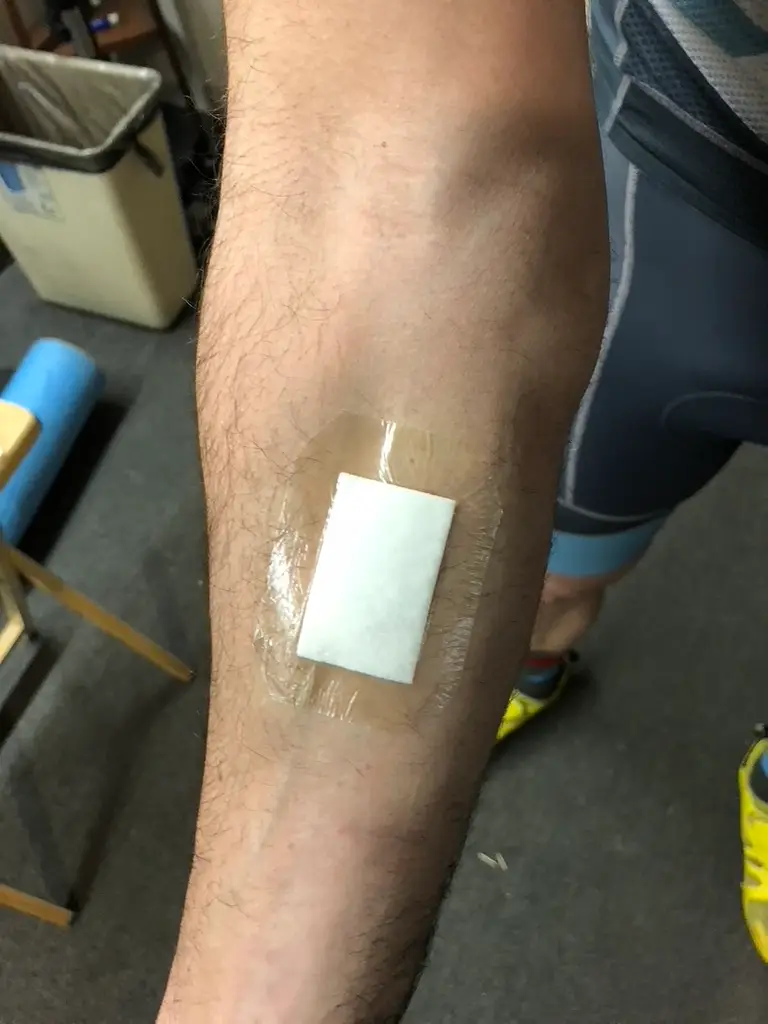
Pad fully applied and adhesive sealed
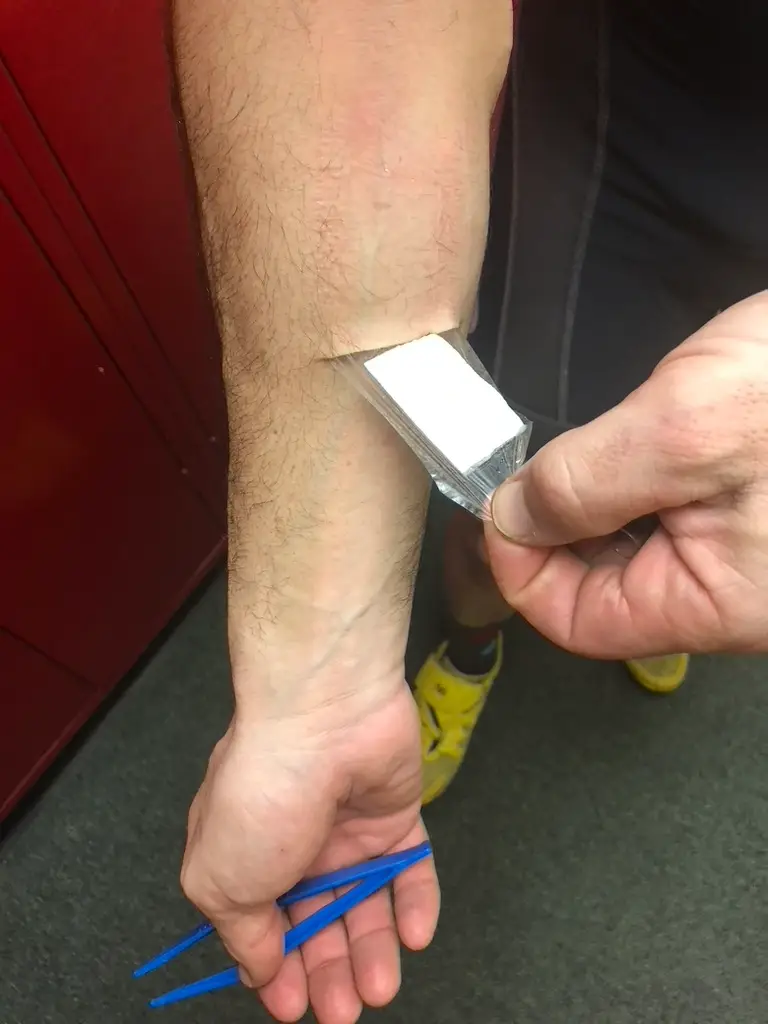
Grasping the corner — avoid touching the pad surface
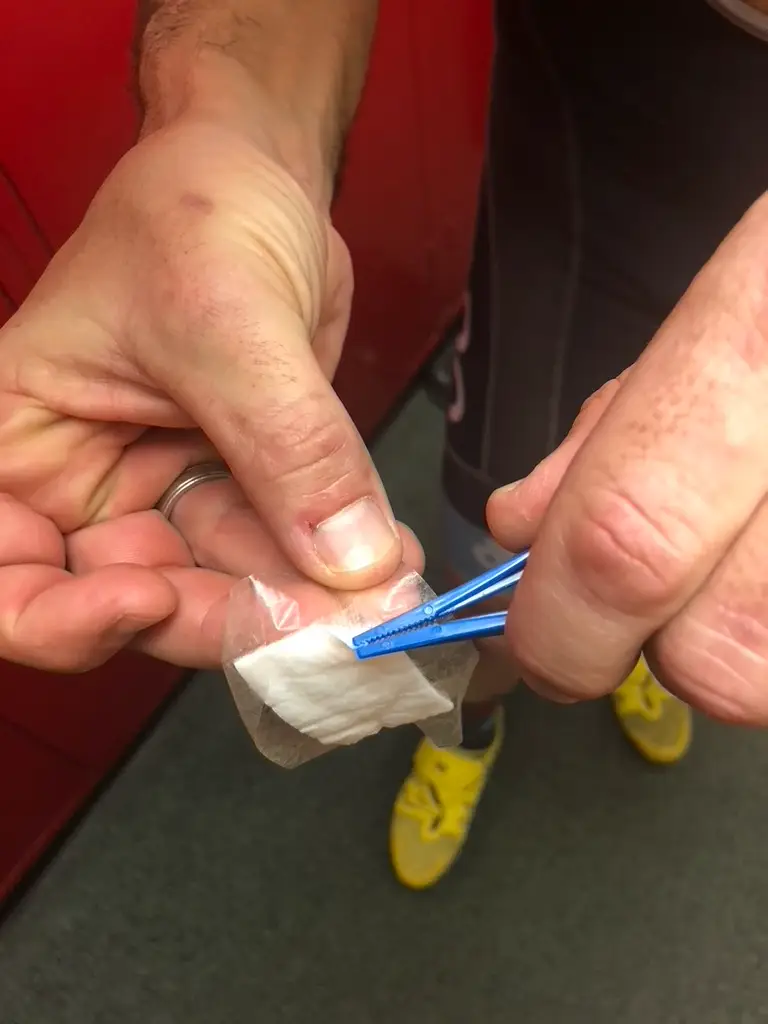
Tweezers in hand, separating pad from adhesive
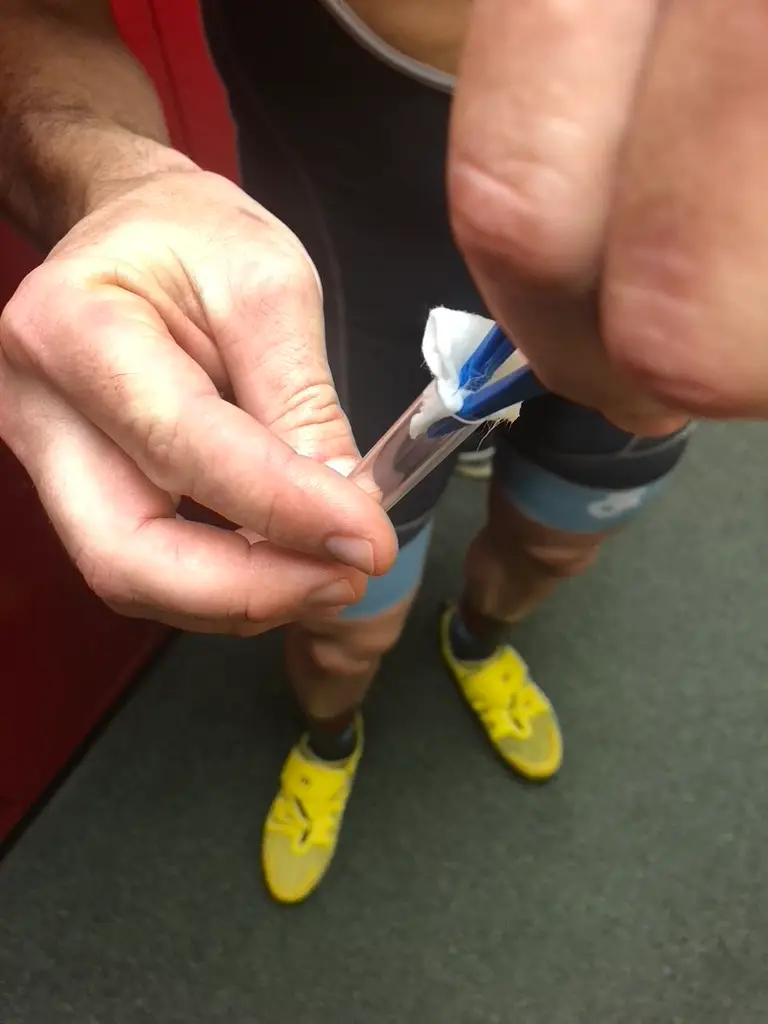
Dropping the pad into the collection tube and capping tightly
Ipswich, MA 01938
Use your pre/post weight and fluid data in the Sweat Rate Calculator to complete your analysis
Knowing your sweat sodium concentration is essential -- but how much of that sodium you need to replace during racing is not simply a fixed percentage of what you lose. Research by McCubbin (2023, 2025) shows that sodium requirements during exercise are determined by the relationship between sodium and fluid, not by sodium losses in isolation.
In practical terms: an athlete replacing a small fraction of their sweat losses (a high sweater accepting a managed deficit) may need relatively little supplemental sodium, because total body water is falling and plasma sodium concentration remains stable or rises. An athlete replacing most of their sweat losses -- a low sweater who can drink close to their full sweat rate -- needs to replace sodium more aggressively to avoid diluting blood sodium as fluid intake rises.
This is why your sodium recommendation cannot be made from sweat sodium concentration alone -- it requires your sweat rate (from the Sweat Rate Calculator), your planned fluid replacement percentage, and your personal sodium concentration together. Your BPC coach will integrate all three when interpreting your results. The key takeaway: get the test, know your number, and let your coach build the plan around it.
| Fluid turnover % of sweat loss replaced |
Low sodium sweat <40 mmol/L |
Average sodium sweat 40–60 mmol/L |
High sodium sweat >60 mmol/L |
|---|---|---|---|
| 70% replacement | None needed | 30–50% | 50–70% |
| 80% replacement | 30–50% | 50–60% | 70–80% |
| 90% replacement | 50–70% | 60–70% | 80–85% |
Adapted from McCubbin AJ (2023). Eur J Sport Sci. 23(6):992–1000. Values represent estimated % of sodium losses that need to be replaced to maintain blood sodium stability. Your BPC coach will apply these ranges to your personal sweat rate and race fluid plan.
Sweat sodium collection kit
Everything you need to collect a valid sweat sample and mail it to our lab. The kit itself is straightforward -- the real value is in what comes back: a precise sodium concentration reading interpreted by your BPC coach with specific race-day recommendations tailored to your sweat profile, your event, and your nutrition plan.
Kit shipped to your address. Return the sample using the included mailer.
Fill out the form below and your coach will follow up to confirm your order and arrange payment.
Submit your session data
Fill this out immediately after your workout. Your submission is logged and forwarded to your coach. Once you receive your sodium results, use the same pre/post weight and fluid intake data in the Sweat Rate Calculator to calculate your sweat rate -- then bring both values into the Race Nutrition Planner to build your complete hour-by-hour race plan.